Department of Agricultural and Biosystems Engineering
Committed to producing top-tier engineering professionals equipped with theoretical knowledge, practical skills, and innovative capabilities for sustainable agricultural development.
Vision
To be a centre of excellence in Agricultural and Biosystems Engineering education, research, innovation and sustainable development.
Mission
The mission of the Department of Agricultural and Biosystems Engineering is to produce graduates of high academic and professional standards who are equipped with relevant theoretical knowledge, practical skills and innovative capabilities; to advance indigenous technologies through research, development and innovation; to promote sustainable agricultural and biosystems practices; and to foster lifelong learning, industry collaboration and community service for the advancement of society.
Brief History of the Program
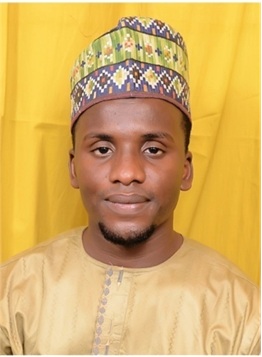
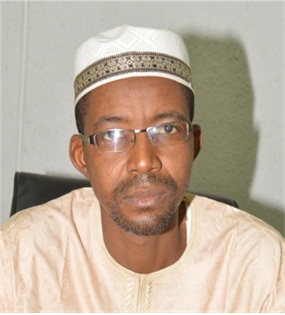
The Department of Agricultural Engineering was established in 2018/2019 session when the first set of students (forty (40) in number) was admitted in to Level 100 of the 5-year Bachelor of Engineering (Agricultural) degree program. The first Acting Head of the Department was Engr. Dr. Bashir Isyaku Kunya with Engr. Dr. Shamsu Auwal Tukur who assists with other responsibilities in the Department. Recently, Engr. Dr. Shamsu Auwal Tukur was appointed as the acting head of the program. The first set of admitted students is currently in Level 200, and the newly admitted Level 100 students for the current session (2020/2021) are seventy-eight (78) in number and are in the second semester at the time of writing this Handbook. The 2019/2021 session been skipped due to COVID-19 pandemic. The Department has three newly employed visiting lecturers: Prof. Usman Shehu Muhammad (A.B.U. Zaria), Prof. M. S. Abubakar (B.U.K.), and Dr. D. D. Nalado (B.U.K.).
Philosophy of the Program
The general philosophy is to produce graduates with high academic standard and adequate practical background for self-employment as well as being of immediate value to industry and the community in general. The program covers the basic areas of agricultural engineering, including farm power and machinery, food processing and crop storage, post-harvest handling, soil and water management (irrigation and drainage systems, erosion control, and pesticide/fertilizer use/management), farm electrification and farm structures.
Objectives of the Program
The program is designed to prepare students for careers involving the application of engineering principles to agricultural mechanization and crop production; crop processing and storage; and conservation of soil and water resources. The specific objectives of the Agricultural Engineering program are to train engineers and equip them with appropriate knowledge and skills required to function in one or more of the following roles towards national/global food self-sufficiency:
- To design agricultural engineering projects and supervise their construction, evaluation and implementation;
- To manage the natural resources, increase and sustain agricultural, aqua-cultural and/or forest production;
- To maintain or change the natural characteristics of food and biomaterials for suitable purposes;
- To provide desirable technological means for agricultural production, processing and storage.
Employability & Curriculum Design
Graduates of this program find jobs in diverse sectors as:
- In the Integrated Farm, Tractor and Machinery automobile, Agro-allied industries, building and construction, food and beverages, manufacturing, oil and gas, power, exploration and geo-technical company;
- Industrial systems engineers, product designers, managers, researchers, and performing a multitude of other traditional Agricultural Engineering duties; and
- To become an entrepreneur (employer of labor in field relating to Agricultural Engineering).
The curriculum is designed to:
- Equip graduates of the Agricultural Engineering program with the intellectual capacity (to apply the principles of physics, mathematics, biology, materials science and engineering problem-solving skills) and relevant contemporary techniques;
- Offer students skills that are highly sought after and highly remunerated in industry;
- Prepare graduates to undertake the challenge of working on a wide range of projects, with the prospect of working in a team of other professionals; and
- Develop successful careers as Agricultural Engineers and apply their education in addressing the full range of technical and societal problems with professionalism, engineering competence, creativity, imagination, confidence and responsibility.
Program Educational Objectives (PEOs)
Graduates are expected to be able to attain the following objectives within the five (5) years of training at Aliko Dangote University of Science and Technology Wudil. They should be able to:
- PEO1: Nurture professionals in the fields of agricultural production, food processing, environmental management, and rural development (Professional Excellence).
- PEO2: Conduct innovative research and engage in life-long training through the application of imaging technologies to develop integrated solutions for complex agricultural challenges (Research and Training).
- PEO3: Design and implement engineering solutions that promote sustainable agricultural practices, through the application of engineering principles to solve complex problems in a rapidly changing global environment (Sustainable Development).
- PEO4: Exhibit leadership, teamwork, and ethical responsibility in engineering and community development (Ethical and Social Responsibility).
- PEO5: Apply entrepreneurial skills and innovative thinking to create value-added solutions, establish technology-based enterprises, and contribute to economic development in the agricultural sector (Entrepreneurship and Innovation).
Programme Outcomes (POs) — COREN Compliance Matrix
Programme Outcomes (POs) describe what students are expected to know and be able to do by the time of graduation. These relate to the knowledge, skills, and attitudes that students acquire as they progress through the Programme, adapted by the Department from the COREN manual.
| S/N | Characteristics | Knowledge, Skills, And Attributes |
|---|---|---|
| PO1 | Engineering Knowledge | Apply knowledge of mathematics, science, engineering fundamentals and an engineering specialization to the solution of developmental and complex engineering problems. |
| PO2 | Problem Analysis | Identify, formulate, research literature and analyze developmental and complex engineering problems reaching substantiated conclusions using first principles of mathematics, natural sciences and engineering sciences. |
| PO3 | Design/Development of Solutions | Proffer solutions for developmental or complex engineering problems and design systems, components or processes that meet specified needs with appropriate consideration for public health and safety, cultural, societal and environmental considerations. |
| PO4 | Investigation | Conduct investigation into developmental or complex problems using research-based knowledge and research methods including design of experiments, analysis and interpretation of data, and synthesis of information to provide valid conclusions. |
| PO5 | Modern Tool Usage | Create, select and apply appropriate techniques, resources and modern engineering and ICT tools, including prediction, modelling and optimization to developmental and complex engineering activities, with an understanding of the limitations. |
| PO6 | The Engineer and the World | Apply reasoning informed by contextual knowledge including humanities and social sciences to assess societal, health, safety, legal and cultural issues and the consequent responsibilities relevant to professional engineering practice. |
| PO7 | Ethics | Understand the impact of professional engineering solutions in societal and environmental contexts and demonstrate knowledge of and need for sustainable development. |
| PO8 | Individual and Team Work | Function effectively as an individual, and as a member or leader in diverse teams and in multi-disciplinary settings. |
| PO9 | Communication | Communicate effectively on developmental or complex engineering activities with the engineering community and with society at large, such as being able to comprehend and write effective reports and design documentation, make effective presentations, and give and receive clear instructions. |
| PO10 | Project Management | Demonstrate knowledge and understanding of engineering, management and financial principles and apply these to one’s own work, as a member and leader in a team, to manage projects and in multi-disciplinary environments demonstrate knowledge and understanding of engineering management. |
| PO11 | Lifelong Learning | Recognize the need for, and have the preparations and ability to engage in independent and lifelong learning in the broadest context of technological and social changes. |
Academic & Technical Staff Profiles
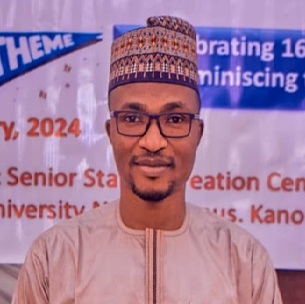
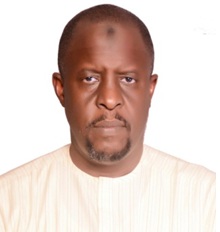
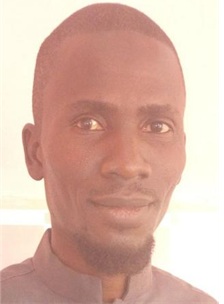
Meet the faculty members driving research, instruction, and innovation in the department.